Back to Intelligence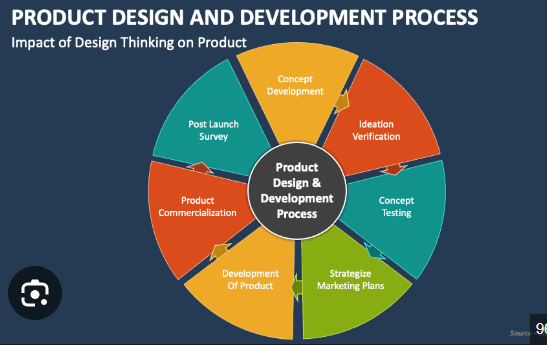
Innovation
1/22/2026
Design Thinking for Product Development: A Step-by-Step Framework
Surbhi Thakur
In the competitive landscape of 2026, building a product that merely "works" is no longer enough. To succeed, you must build products that people actually love. Design Thinking provides a structured, non-linear methodology to achieve exactly that by putting the human experience at the center of development.
The Five-Stage Framework
Design thinking is popularized by the Hasso Plattner Institute of Design at Stanford. Here is the step-by-step breakdown:
Getty Images
- Empathize: Conduct user research to develop a deep understanding of your users' needs and the challenges they face.
- Define: Synthesize your findings into a human-centered problem statement. Instead of saying "We need to increase sales," say "Busy parents need a faster way to prepare healthy meals."
- Ideate: Use brainstorming techniques to generate a wide range of creative solutions. In this phase, quantity precedes quality.
- Prototype: Build scaled-down versions of the product to investigate the ideas generated. This could be a paper sketch or a digital wireframe.
- Test: Return to the users to gather feedback on your prototypes. This is an iterative process; the results often lead you back to previous stages to refine the solution.
Why It Works for Product Managers
Design thinking mitigates the risk of building something nobody wants. By involving the user early and often, product managers can validate assumptions before committing significant engineering resources. It moves the team from a "feature-first" mindset to a "solution-first" culture.